
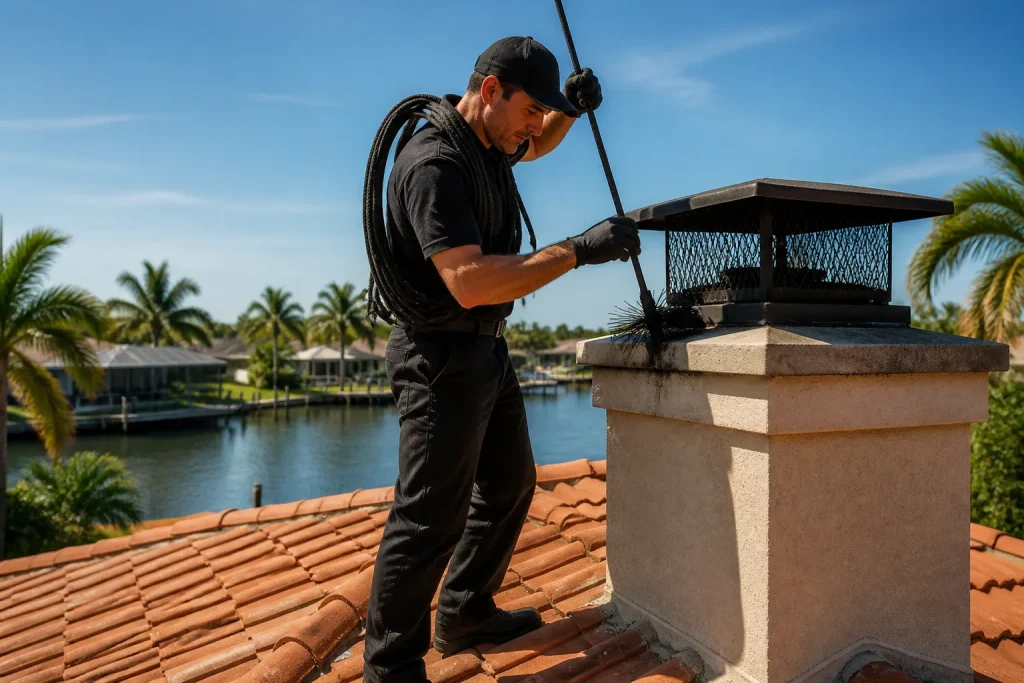
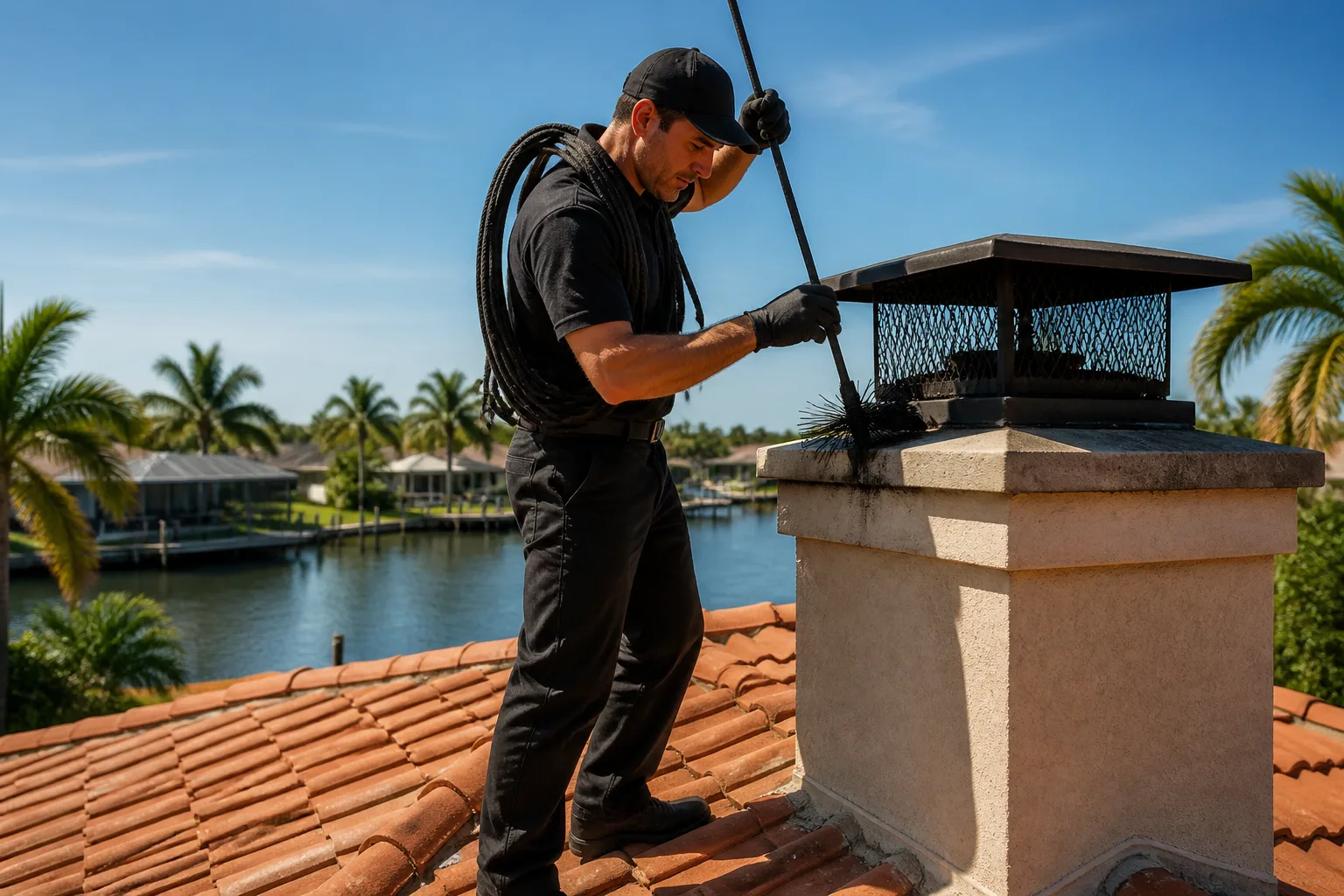
DuraFlex Chimney Sweep in Cape Coral: A Homeowner’s Guide
Most homeowners hear “flexible liner” and picture something cheap and temporary, a stopgap someone talks you into when a real repair costs too much. Here’s the part that gets missed: DuraFlex is a stainless steel, UL-listed liner system that chimney professionals specify for high-end new construction, not just patch jobs. The “flexible” in the name refers to its geometry, not its durability. A flexible liner bends and follows the shape of your flue; a rigid one can’t. That distinction matters more in Cape Coral than most people realize, and this guide explains exactly why.
If you’d rather have someone look at your chimney than climb a ladder with a flashlight, call (888) 247-9034. We answer 24/7.
What Is a DuraFlex Liner and What Does It Actually Do?
A DuraFlex liner is a continuous stainless steel flue liner that runs the full height of your chimney, carrying smoke, gases, and heat safely up and out. It’s UL-listed, which means it has been tested to a recognized safety standard for venting solid-fuel appliances. It replaces or lines the inside of your existing flue, giving exhaust a smooth, sealed path instead of one that’s cracked, unlined, or full of mortar gaps.
Lining matters because an unlined or damaged flue lets combustion gases escape into the structure of the chimney and, potentially, into the home. It also lets creosote build up unevenly and makes the flue harder to sweep clean. A proper liner gives the flue a consistent interior that both vents better and cleans better.
DuraFlex specifically addresses a problem that rigid stainless sections can’t: chimneys that don’t run perfectly straight. In Cape Coral, plenty of homes were built with flues that offset, taper, or use non-standard shapes. A rigid liner needs a straight, uniform passage; forcing one into an offset flue means cutting it into sections, and every joint is a weak point. A flexible liner follows the path of the flue in one continuous piece, with far fewer seams to worry about.
The material is worth understanding too. DuraFlex systems are commonly built from 316Ti stainless steel or a comparable alloy. That grade is chosen for its resistance to heat and to the corrosive compounds that form when wood or gas burns. Lower-grade flexible liners sold by generalist contractors often use thinner metal and lesser alloys that can degrade faster. The difference isn’t marketing; it’s what’s in the steel.
When Does DuraFlex Beat a Rigid Liner or a HeatShield Repair?
Knowing which repair fits which problem is the whole game. DuraFlex is the right call in specific situations, and the wrong one in others. Here’s how we think about it.
DuraFlex flexible liner is usually the better fit when:
- Your flue has an offset or bends somewhere between the firebox and the top. Rigid sections can’t make the turn cleanly.
- The flue is non-standard in shape: oval, rectangular, or irregular in a way that a round rigid liner won’t seat.
- You have older masonry where the interior is rough but structurally sound, and you want a new, sealed passage without tearing the chimney apart.
- You need a continuous, low-seam run from top to bottom.
A rigid liner is often the answer when the flue is straight and uniform, since rigid sections can be more economical in a simple configuration.
HeatShield is the repair option when the flue is largely intact but has isolated cracks, gaps, or spalling in the mortar. HeatShield is the industry’s leading liner-restoration system: it reskins the inside of the flue and extends its service life without a full rebuild. That’s a cost-effective alternative many generalists simply don’t offer, and it avoids demolition when the chimney doesn’t need it.
Getting this decision right starts with actually seeing the flue, not guessing. That’s why a camera inspection comes before any recommendation. In Cape Coral, a flue that looks fine from the roof can turn out to have an offset or a hidden crack a few feet down.
What a Correct DuraFlex Installation Looks Like, Start to Finish
Homeowners who understand the process can spot shortcuts. A proper DuraFlex installation follows a clear sequence, and any step skipped is a red flag. Here’s what the job should involve from your side of the ladder.
- A camera inspection first. Before anything is ordered, the flue is scoped and photographed. You should be able to see the footage. A recommendation without evidence is exactly what you should question.
- Sizing and grade selection. The liner is matched to your appliance and flue dimensions, and the steel grade is confirmed. This is where cheap substitutes get quietly swapped in; ask what grade is being installed.
- Cleaning the flue. The interior is swept before the liner goes in, so debris and old creosote aren’t sealed behind it.
- Inserting the liner as one continuous run. The flexible liner is fed down in a single piece, following the offset. No pieced-together sections.
- Connecting at the appliance and the top. The liner is secured at the firebox or appliance connection and terminated correctly at the crown, with a cap fitted.
- Top-seal and water exclusion. In Cape Coral’s rainy climate, the top of the chimney is where water gets in. A top-seal damper and a well-fitted Copperfield chimney cap work with the liner to keep rain out of the flue, not just sparks and animals.
- A final check and documentation. The finished install is verified with photos you can keep.
If you’re weighing this against other options, our chimney repair page covers the broader repair picture. The short version: any reputable installer should walk you through these steps before work begins, not after.
Why the Right Liner and the Right Cap Work Together in Cape Coral
A liner is part of a system, not a standalone part. Cape Coral’s rainy season is the reason to think about it as one. Water is the quiet enemy of a masonry chimney: it works into the crown, down the flue, and into the joints, and over time it breaks down the very structure the liner is meant to protect.
That’s where the top of the chimney earns its keep. A top-seal damper closes the flue at the crown when the fireplace isn’t in use, which keeps rain and downdrafts out far better than a throat damper alone. A properly sized Copperfield chimney cap adds another layer, shedding water off the flue opening and keeping animals and debris out. Together with a sealed DuraFlex liner, they form a complete water-exclusion system: rain stays out at the top, exhaust still goes up and out when you’re burning, and the flue interior stays dry between uses.
Skipping the cap or the top-seal to save a little on the job is false economy. The liner may last decades, but water intrusion around an unprotected crown can undermine the masonry around it far sooner. In our experience, homeowners who line the flue but leave the top unsealed end up back on the phone.
What Voids a DuraFlex Warranty, and How to Protect Yours
A liner’s warranty is only as good as the installation behind it. DuraFlex carries manufacturer warranty terms, and those terms depend on the system being installed to the manufacturer’s specification by a qualified professional. Do the job right and the coverage stands. Cut corners and it can be voided. The practices that void warranties are usually the same shortcuts cheap installers take.
Common things that can void a warranty:
- Installing over a dirty or damaged flue without proper cleaning and inspection first.
- Using the wrong grade or size for the appliance, or substituting a lesser alloy than specified.
- Improper termination at the top or the appliance connection, or no cap fitted.
- Missing the top-seal and water-exclusion components the system is designed to work with.
- No documentation of the installation, which leaves you unable to prove it was done correctly.
This is where working with a chimney-only specialist protects you. We source from recognized industry brands (DuraFlex, HeatShield, Gelco, Olympia Chimney, Famco, and Copperfield) and install to manufacturer specification, because a warranty you can actually rely on is part of what you’re paying for. A generalist who does sweeping “on the side” may not know these requirements, and may not be around when you need to make a claim.
When to Call a Pro
Some chimney work is a look-and-see; liner work is not. If you notice smoke backing into the room, a strong creosote smell, visible cracks in the flue, or staining on the chimney exterior, those are signs to have a professional scope the flue before you light another fire. High-tension components aren’t the concern here, but cracked or unlined flues are a real safety issue: combustion gases need a sealed path up and out, and only a camera inspection can confirm yours has one. Don’t take a recommendation on faith; ask to see the footage.
Our technicians have up to 9 years of experience, and our focus is chimneys year-round rather than rotating between roofing and HVAC. If you want to start with a cleaning, a chimney sweep is the natural first step before any liner decision.
Related services in Cape Coral: whether you need a sweep, an inspection, or repair, we cover all three as a single-source specialist, so there’s no handoff between contractors.
The Bottom Line
DuraFlex is a stainless steel, UL-listed liner system built for exactly the kind of flues that rigid liners can’t handle: offsets, irregular shapes, older masonry. It’s the right choice when flexibility is what your flue needs, and HeatShield or a rigid liner may be the better fit in other cases. What matters most is that the decision is based on a real camera inspection, the install follows the manufacturer’s specification, and the top of the chimney is sealed against Cape Coral’s rain.
Understanding what the product does puts you in a position to ask the right questions instead of accepting whatever gets recommended. That’s the goal of this guide. If you’re in Cape Coral and want a straight answer about your chimney, Cape Coral Chimney Sweep offers free estimates, and the written estimate sets the final price. Call (888) 247-9034. We answer 24/7. Fast dispatch from 7am to 7pm, Sunday through Friday.
Frequently Asked Questions
Pricing for a DuraFlex liner is set per job by a written estimate, because the cost depends on flue height, configuration, and the grade selected, so we don’t quote a flat figure without seeing the flue. A camera inspection comes first, and the estimate is free. Call (888) 247-9034 for an exact quote; estimates are free.
Yes. A DuraFlex liner is stainless steel and UL-listed; “flexible” describes its ability to follow an offset flue, not a weaker material. In many cases it’s more durable in practice because it runs as one continuous piece with fewer seams. The key is correct grade and correct installation. Call (888) 247-9034 to talk through your flue.
It depends on the condition of the flue. HeatShield restores a flue with isolated cracks or mortar gaps without a full rebuild; DuraFlex is the better fit for offsets, odd shapes, or a flue that needs a fully new passage. The only way to know is a camera inspection, and you should be able to see the footage. Call (888) 247-9034 to book one.
Yes. A liner works best as part of a complete system, and in Cape Coral’s rainy climate the top of the chimney is where water gets in. A top-seal damper and a fitted Copperfield cap keep rain out of the flue and protect the masonry around it. Skipping them can undermine even a well-installed liner. Call (888) 247-9034 for a free estimate.
Written by the team at Cape Coral Chimney Sweep.
Need Chimney Cleaning Help?
Call Cape Coral Chimney Sweep - licensed & insured, with free written estimates in Cape Coral.
(888) 247-9034